Career math: you have ~8 jobs left
Each one is 12% of your remaining career. Choose wisely.
In my last post, I wrote this:
"27. You never know when you'll do something for the last time."
It's a topic I brought up in conversations a lot this weekend. I went to a Lacrosse tournament (a fun, not very competitive one), where just playing the game for the love of the game takes precedence over winning.
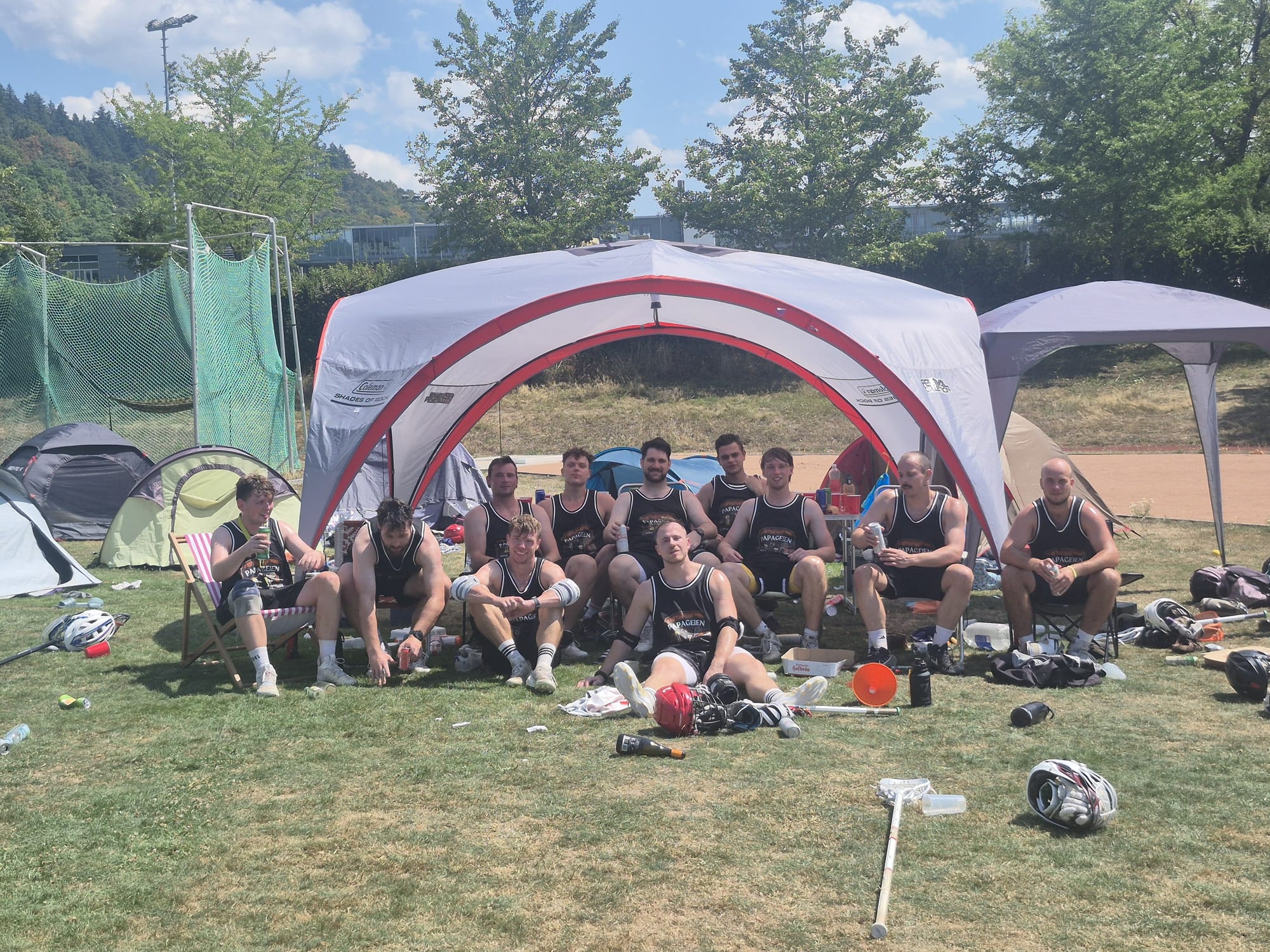
I was also one of the oldest guys and girls there. This maybe wasn't my last tournament, but realistically, how many more of those will I do in my life? 5? 10? At some point, you grow out of your sport; the same is true for your business; your relationships; your career.
Tim Urban describes this in The Tail End (one of the most impactful posts ever written on the internet imo): by the time we turn 18, we've already spent ~93% of the overall time that we'll ever spend with our parents.
This made me think: how many jobs will I realistically still have in my career? If I project an average 4-year tenure in a business / job / industry, then I have 7, maybe 8 jobs left. That's … not a lot.
Each of those jobs will take up 12–15% of my remaining career. So whatever I pick isn't "just a job", it's a valuable slot that could be allocated elsewhere. And the safe, boring job burns the exact same slot as the ambitious one. No discounts for playing it safe.
But it gets worse: this math assumes every option stays on the table forever. It doesn't.
Startups usually hire young, ambitious people (trust me, I have the data on this; getting a startup job if you're older than 40 is really, really difficult). All of a sudden, your realistically available "startup working time" is ~15–20 years, depending on when you graduate.
Same goes for international jobs: if you're 25 and wanna travel a lot for business – go for it! But if you're 35 and just had two kids, relocating for work is going to be really, really difficult.
Founding a company is similarly difficult to get right: you have nothing to lose out of university, but might be lacking the skill, capital, network; the further advanced you are in your career, the more you have to lose and the more responsibilities you have that keep you from the intensity of the first few years. There's only bad times and really bad times to found a company.
These windows close silently. Nobody tells you when your last realistic chance to join a startup, to relocate abroad, to found a company is. You only find out in retrospect.
So what do we do about this?
Say we have ten "career slots". Some of them should probably be allocated to learning. Some to making money and providing stability. Others should be purpose-driven – building things you wish existed. And so on.
Coming out of university, I was obsessed with impact entrepreneurship. I wanted to build a company that isn't just profitable, but also provides massive social impact.
And we did: we founded a business that brought >400 unemployed nurses from Italy into the German healthcare system by teaching them German. Due to our work, we estimate that during peak COVID, ~50 more ICU beds were available in Germany. That's … honestly, pretty cool. And the company was profitable!
Looking back, I would've planned my career differently. We had no idea what we were doing, zero network, zero capital. We brute-forced this thing into existence.
If I were to build the same business with the skillset, network, and capital I have now, I'm confident we could have easily had ten times that impact. I used an "impact career slot" too early, when I really should've focused on building up leverage.
The first half of your career is for building leverage. The second half is for using it (beneficially for society, in my case).
Knowing this, we can design the slots for each stage of life:
Slots 1 and 2 should be dedicated to maximizing learning & network. In my case, founding a company was the right instinct — but as 20-somethings, we probably should've picked something where we raise VC, try to grow really, really fast, and force ourselves to learn a ton in a short timespan.
A Founder's Associate position is a good alternative for anyone who doesn't feel comfortable building their own thing, and allows for learning on someone else's budget.
Slots 3 and 4 might be more directed towards acquiring capital. In your 30s, financial stability should be the focus. This is the time when people have families, buy real estate, make investments. Could be as a (bootstrapped!) founder, in a leadership position, or as a well-paid individual contributor.
Starting from slot 5, flexibility increases. Could be a similar line of work. Could be a new company. Could be a portfolio career. Because if the first four career slots did what they were meant to do, we now have experience, network, and capital.
And then, it's time to use that leverage to live the life that you want.
- Want maximal impact? Found that business or NGO.
- Want maximal freedom? Build a portfolio career that allows for that.
- Want maximal stability? Get a stable job in a field that won't go away (eg. sales), and just do that.
- Want maximal wealth? Pick whatever market is absolutely ripping right now, and get into that.
But I believe it's the wrong approach to optimize for impact or money first. Money will come one way or the other if you focus on building leverage. Impact is much higher with leverage than without.
So don't use your early career slots on consulting or banking, especially if you dream of having impact or becoming an entrepreneur. (Different story if you wanna be a partner in a consulting firm, or a successful investment banker.)
You don't wanna play the endgame in the opening.
Writing this newsletter, I'm tired. Banged up. My entire body is sore. Because I played my heart out this weekend. With the awareness that I won't have many of those tournaments left, I tried to show up like it mattered. And it was totally worth it.
Do the same thing for your career:
- Be aware that you can't do infinite jobs in life
- Pick the ones that you like and make sense for your career
- Do them like they matter (because they do)
If there's one thing I want you to take away from this newsletter, it's urgency. You don't have infinite time (even though it feels like it in your 20s).
Show up on a daily basis like it matters. Which is easier to do if you love the game.
LFG.
LinkedIn | Threads | X | Bluesky | Instagram | TikTok | YouTube
Whenever you're ready, there are four ways I can help you:
[1] Reclaim up to 4 hours per day and find time to do the things you've always wanted to do by enrolling into Personal Productivity OS.
[2] Hire your next Founder's Associate or other business generalist position with my startup, Generalyst Recruiting.
[3] You could also find your next startup job in Europe by simply applying as a candidate.
[4] Learn how you can build your career as a generalist by subscribing to this newsletter. ⬇️

Dominik Nitsch Newsletter
Join the newsletter to receive the latest updates in your inbox.