Too senior for IC, too operational to lead? [#127]
The seniority trap nobody warns you about. Good news: you can climb out. Here's how.
![Too senior for IC, too operational to lead? [#127]](https://storage.ghost.io/c/76/05/76059825-1f91-4bd4-b91d-87a751c54ec1/content/images/size/w1460/2026/06/How-to-become-a-generalist--74-.png)
Here's a line I've heard more times than I can count since building Generalyst:
"I'm too operational for a leadership role, too senior for an IC [= individual contributor] role."
If that's you, here's what to do about it. Let's go.
Recognize leadership isn't the end-all, be-all
"Man, when I'm really successful, I wanna manage a large organization of people." – no one, ever
If you've ever been a manager, you know what I'm talking about. Being a manager means:
- dealing with politics
- dealing with other people's irrational behavior
- doing unpleasant things (like, firing people)
- as middle manager, being the buffer between pressure from top management and your team
... but most of all, being a manager means that you're doing less of the work that you originally signed up to do.
I love my work. I genuinely do.
I don't want to stop writing, or interviewing candidates, or working with startup founders and operators to figure out their hiring needs. I enjoy that.
I might hire a few people to do everything else around that, but fundamentally, I still want to do the work.
Being a manager removes you from that, and forces you to embrace an entirely different skillset. Which can be fun for some, but not for others.
There's a reason the Peter Principle exists:
People in a hierarchy tend to rise to "a level of respective incompetence": employees are promoted based on their success in previous jobs until they reach a level at which they are no longer competent.
The reward for being great at your work is a job that isn't your work.
So the first step is: realize that the grass isn't greener on the other side. I'm much happier now managing a really small team and doing plenty of IC work myself, than I was when I had an org of 30+ people.
Recognize that high-impact ICs are rare commodities
Elena Verna recently shared this matrix:
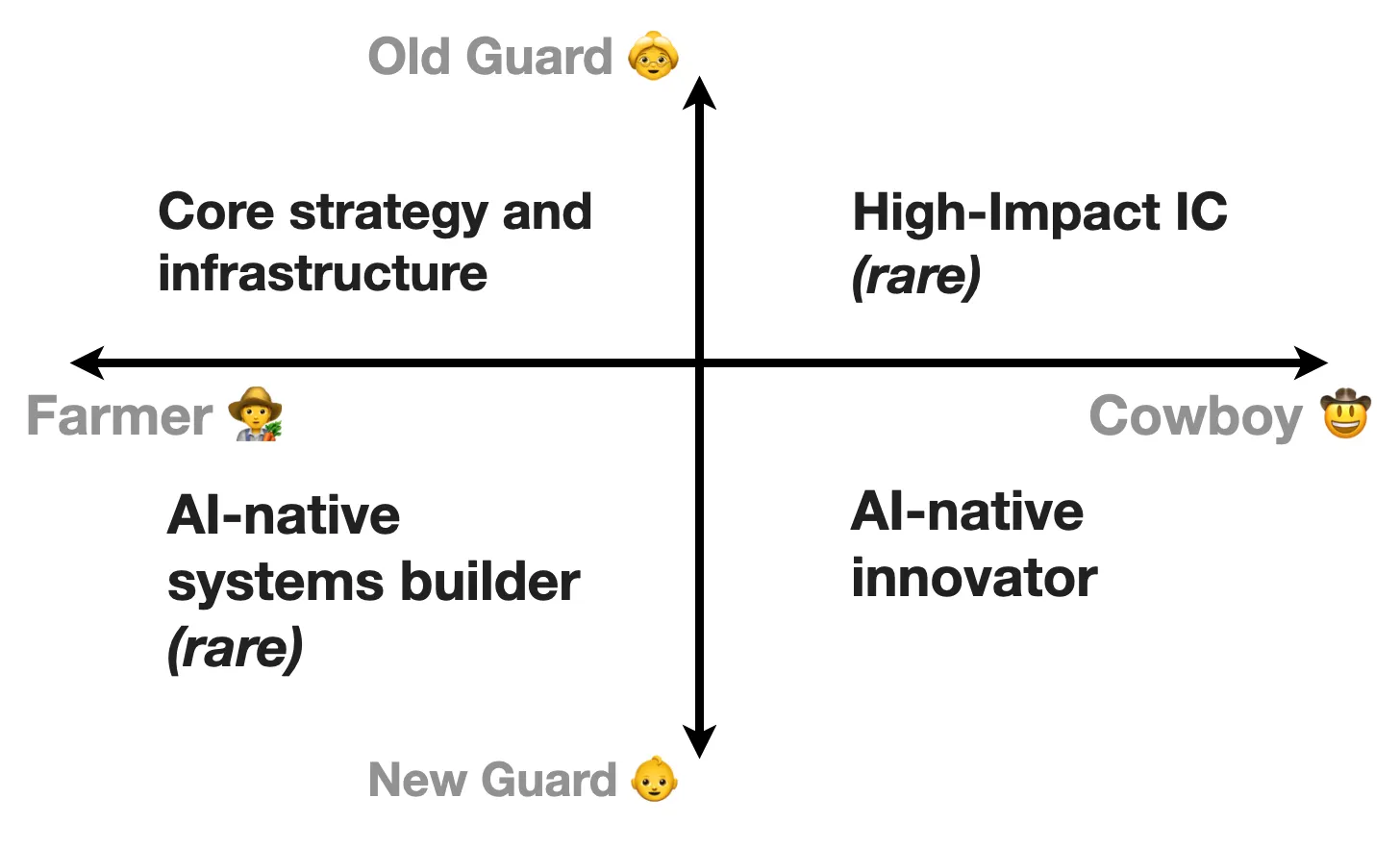
The y-axis describes the level of experience in the industry; the x-axis describes how much you're pushing boundaries and searching new territory.
Cowboys conquer new territory; farmers make sure that the land that's been acquired is used – and enable the cowboys' expansion.
With plenty of experience (often, that shows more in knowing what not to do), you can either continue in your stable "farmer" role ... or you could get really good at frontier technology and innovate across the company.
In fact, as an IC, you'll be able to experiment more than as a manager: you have freedom to do the things you want to try, instead of trying things on top of your day job managing other people's priorities.
We see this unfolding right now:
IC work is cool again
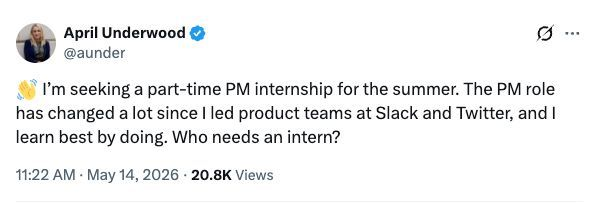
She's not the only one:
- Workday CTO → joins Anthropic as IC
- Instagram founder → goes from Anthropic CPO to IC
- OpenAI CPO → leaves role to become IC in research team
At least in the product world, moves to becoming an IC are becoming increasingly common. And if the people who could be in the highest echelons of management do this, why shouldn't you?
OK, Dominik, but what about the commercial side? I get that coders wanna code.
On the commercial side, it's been cool to be an IC for a while now, particularly in sales.
One of my best friends is an Account Executive at a large SaaS firm (you know them and have likely used their product). He's been doing this for 9 years and has little interest in becoming a manager. Because he'd just make less.
Really good closers (read: ICs) often make more than their managers.
This used to be true in just sales. But more and more companies are now implementing dual tracks: one "management" track where you become a manager, and one "expert" track where you get promoted to the same salary standards but continue to do your IC work.
Take these salaries from Google (courtesy of levels.fyi):
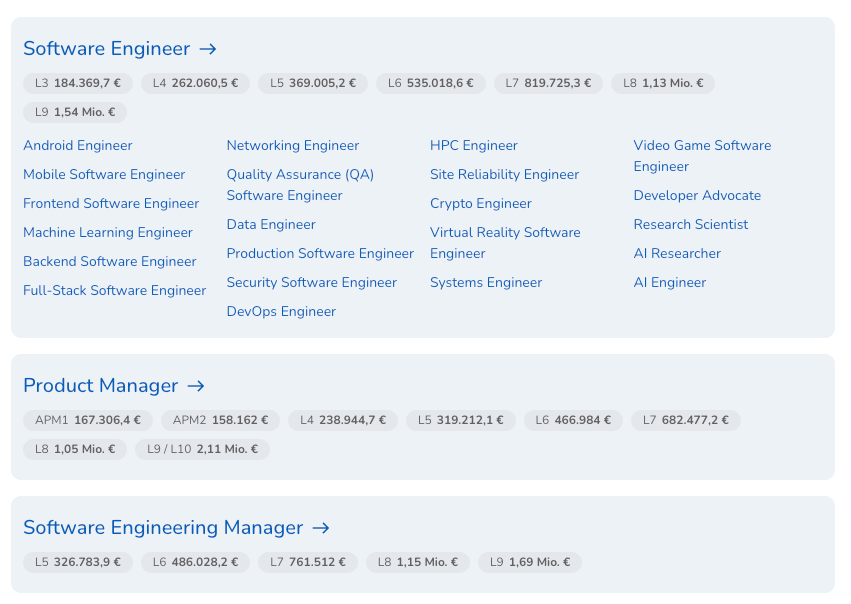
Here, a L7 engineer might well report to a L6 manager. The engineer owns technical direction; the manager owns people.
Other companies are implementing this, too. When I left my last job, we were just in the process of implementing management + expert tracks.
Being really good at what you do is valuable. Especially if you do it all day. Leave the managing to people who actually want to manage.
Who's hiring for these people?
Based on the hundreds of conversations I've had with founders over the past year, I feel like you can roughly divide them (and their hiring philosophy) into two camps.
- Camp 1: hire lots of juniors, have them work really long hours, grow the organization quickly.
- Camp 2: hire fewer, highly qualified seniors who know how to get the job done efficiently; grow the organization deliberately.
Companies in the first camp usually have a business model that's fairly easy to understand, where the biggest obstacle to scaling is simply working hard. Think: any AI-based SaaS competing in a red ocean market.
The ones in the second camp tend to have more complex products, often run by repeat founders, where getting things right matters more than doing them quickly.
Hint: at Generalyst, we work with both types of companies (and we have plenty of senior IC roles). Apply today.
Hiring senior ICs is, btw, really good for the job market. If the only way to move up would be to become a manager, and every manager needs to manage > 1 person, than the organizational hierarchy becomes a pyramid, where it's either up or out.
Which would leave terrifyingly few positions for more senior people in the market.
By recognizing that senior ICs are, in fact, extremely valuable, more jobs for senior folks become available.
Because - and nobody tells you this coming out of university - for many hiring managers, having a lot of experience is worse than having no experience. (But that's a separate topic I'll tackle in a future newsletter.)
Be so good they can't ignore you.
One big question remains: how do you find one of these jobs?
And the answer is: be so good at what you do that they can't ignore you.
If my Account Executive friend were looking for a new job, I'd instantly be able to place him: outperforms his quota every quarter; named to president's club a few times; highly conscientious and reliable; and, most of all, just an overall great human.
So:
- achieve great results in your work (this is, unfortunately, essential – you can't just do shit work and then expect others to hand out jobs and promotions)
- talk about achieving those great results (a job search isn't the right place to be humble)
- ask the right people to get you access (and if you've done steps 1 and 2, they will)
Achieving great results will be much easier if you enjoy what you do.
Find that, do it a lot, get really good at it, talk about it, and don't get distracted by the allure of managing people unless managing people is what you really enjoy.
If you liked this post, there's more content where that came from on all sorts of social media. Pick one + follow. ⬇️
LinkedIn | Threads | X | Bluesky | Instagram | TikTok | YouTube
Whenever you're ready, there are four ways I can help you:
[1] Reclaim up to 4 hours per day and find time to do the things you've always wanted to do by enrolling into Personal Productivity OS.
[2] Hire your next Founder's Associate or other business generalist position with my startup, Generalyst Recruiting.
[3] You could also find your next startup job in Europe by simply applying as a candidate.
[4] Learn how you can build your career as a generalist by subscribing to this newsletter. ⬇️

Dominik Nitsch Newsletter
Join the newsletter to receive the latest updates in your inbox.